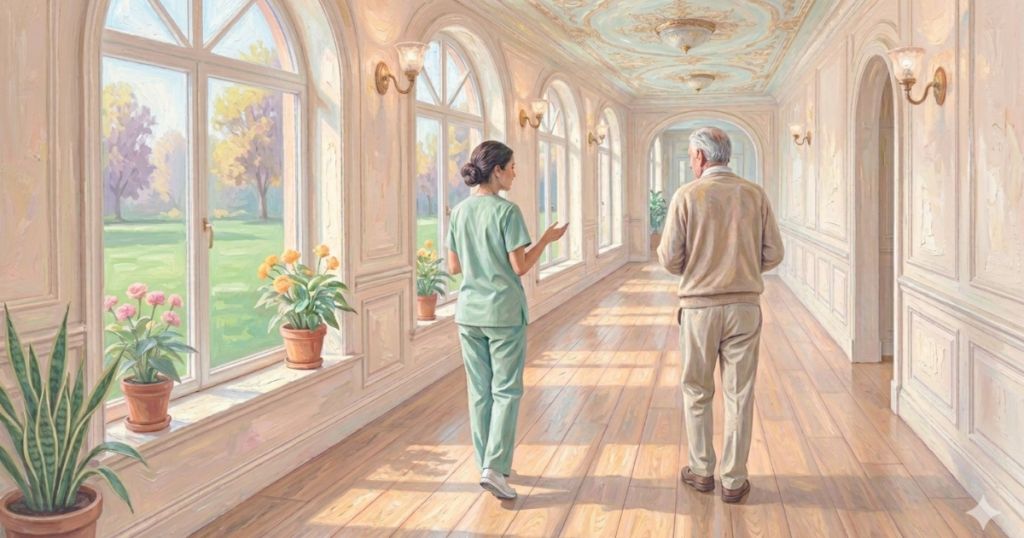
You search online, read a few reviews, shortlist two or three places, and schedule a visit. But are you making the most out of that visit?
A 2022 WHO report found that family involvement during the selection process is one of the strongest predictors of resident satisfaction.
Photos, virtual tours, and phone calls are useful starting points. Many facilities now offer virtual walkthroughs to offer a sense of the layout, the rooms, and the general environment. These work well as a primary filter but they cannot tell you what an in-person visit will.
They will not show you how the night staff interacts with residents, what mealtimes actually look like, or whether the facility smells clean. A visit is the most reliable way to assess whether a facility is genuinely right for your elder.
Depending on your elder’s care needs, an assisted living facility could be their home for months or years. The decision deserves more than a scheduled tour where everything looks its best.
This guide is here to help you make the most of every visit whether you are just beginning your search or are close to a decision. Here is what it covers:
- How to prepare before your visit
- What to observe during the tour: outside, inside, and in the rooms
- The best questions to ask when visiting an assisted living facility
- Tips to get the most out of your visit
- A printable checklist you can carry to every facility you visit
How to Prepare for Your Tour
A visit to an assisted living facility comes after you have already done some groundwork. Visiting a facility that does not even meet your elder’s basic needs is a waste of your time.
Start by defining what kind of care your elder actually needs.
- Independent living: Your elder is largely self-sufficient but wants a safe, community-oriented environment with some support available.
- Assisted living: Your elder needs help with activities of daily living (ADLs): bathing, dressing, medication management, meals.
- Memory care: Your elder has been diagnosed with Alzheimer’s or another form of dementia and needs a structured, secure environment with specialised staff.
- Short-term or respite care: You need a temporary arrangement: post-surgery recovery, or a break for the primary caregiver.
Once you know what you are looking for, here is how to prepare.
1. Research Facilities Online First
Before calling anyone, spend time on each facility’s website. Look for:
- Location and proximity to family members
- Type of care offered and whether it matches your elder’s needs
- Photos of rooms, common areas, and outdoor spaces
- Any published pricing or cost information
- Reviews on Google, social media, or senior care directories
Eliminate facilities that clearly do not fit. Your visit list should only include places that have passed this basic filter.
Find out what factors impact the cost of assisted living in india, use our assisted living cost calculator to get an estimate for your specific situation
2. Have a Telephonic Discussion Before Visiting
A short phone call with the facility can save you a lot of time. This is your chance to ask questions that are not available on the website and whether a visit is even worth making.
Good questions to ask on the call:
- What types of care do you offer, and do you have capacity right now?
- What is the room availability: single rooms, shared rooms, or both?
- What is the monthly cost, and what exactly does it include?
- Are there additional charges for services like laundry, transportation, or medical visits?
- What is your staff-to-resident ratio during the day and at night?
- Do you have trained medical or nursing staff on-site at all times?
- Are dietary needs and restrictions accommodated?
- What is your process if a resident’s care needs change over time?
- Are family members allowed to visit freely, including at mealtimes?
If the staff on the call is vague, evasive, or unable to answer these questions, that is information too.
3. Scheduling Your Tour
The best visit is an unannounced one. What you see on an ordinary Tuesday is far more representative of daily life than a scheduled Saturday tour where everything has been tidied up and the best staff are on shift.
If you are coming from another city, showing up unannounced may not be feasible or practical. Here are some ways to get a more realistic picture:
- Visit at different times of day. Morning visits show how the day begins, an afternoon visit lets you see residents engaged and even interact with them, and an evening visit gives you a quieter, more relaxed window to observe.
- Visit on different days of the week. Weekday and weekend staffing can differ significantly.
- Bring your partner, a sibling, or even your elder along. Different people notice different things. If going multiple times feels awkward, having a different companion each time makes it feel natural.
Note: Families have every right to visit a facility as many times as they need before making a decision. A well-run facility will welcome this. One that discourages repeat visits should raise concern.
4. Carry a Checklist
You are likely visiting more than one facility. It is nearly impossible to remember details across multiple visits without writing things down. At the end of this blog, you will find a printed checklist you can take with you. Use it at every facility. This makes comparison straightforward and ensures you do not overlook something important in the moment.
What to Observe and What to Ask During the Tour
What to Observe
Much of what matters in an assisted living facility can be seen or sensed without asking a single question. Here is what to pay attention to.
Outside the facility
- Is the surrounding neighbourhood safe, calm, and accessible?
- Is the facility easy to reach by road or public transport? This matters for family visits.
- Is there adequate parking?
- Does the exterior look well-maintained? Peeling paint, broken pathways, or overgrown gardens can signal neglect that extends indoors.
- Is the entrance secure without feeling institutional?
Inside the facility
- Is the facility clean and free of persistent odours? A faint smell of cleaning products is normal. A persistent smell of urine or mustiness is not.
- Is the lighting adequate throughout corridors, staircases, common rooms?
- Are there handrails along corridors and staircases?
- Is the facility wheelchair-accessible throughout not just at the entrance?
- Do the common rooms look lived-in and active, or empty and unused?
- Is the dining area clean and properly set up?
Inside the room
- Is the room well-ventilated and naturally lit?
- Is there adequate space for furniture, personal belongings, and movement within the room?
- Is there an emergency call button, and is it within easy reach of the bed and bathroom?
- Does the bathroom have grab bars, non-slip flooring, enough space for a caregiver to assist if needed?
- Does the room feel secure and private?
The staff
- Do staff greet residents by name? This signals familiarity and relationship.
- Do staff appear patient and unhurried, even when the facility is busy?
- Are residents comfortable approaching staff on their own? Or do they seem hesitant?
- Is there any visible frustration, dismissiveness, or rough handling? This is a serious red flag.
The residents
- Do residents look clean, well-groomed, and appropriately dressed?
- Are they talking to each other, participating in activities, or moving around?
- Or do they appear withdrawn, bored, or unstimulated? This can indicate a low standard of engagement rather than individual preference.
Important: If you can, speak briefly and privately with a current resident or a family member visiting that day. A five-minute candid conversation is worth more than the entire tour. A good facility will have no reason to discourage this.
What to Ask the Staff
Beyond what you observe, there are questions that only a direct conversation with staff can answer. Below are common questions followed by questions specific to each care type.
Questions for all care types
- How is each resident’s care plan developed? Who is involved in that process?
- How often is the care plan reviewed, and are family members included?
- What is the process when a resident’s health condition changes?
- What are the staffing levels during the day, evening, and overnight?
- What is your average staff turnover rate over the past year?
- What training do caregivers receive, and how often is it updated?
- How do you handle medical emergencies?
- Can we see your most recent state inspection report?
- What is your policy on family visits: timing, frequency, participation in meals?
- How are complaints or concerns from residents or families handled?
For independent living
- What level of support is available if a resident’s needs increase over time?
- Can residents transition to assisted living within the same facility if needed?
- What social and recreational programmes are available?
- Is there flexibility around daily routines: mealtimes, activities, visitors?
For assisted living
- Which specific activities of daily living do your caregivers assist with?
- How is medication managed?
- What happens if a resident refuses care or becomes uncooperative?
- Is a doctor or nurse on-site, or available on-call?
For memory care
- What specific training do staff receive for dementia and Alzheimer’s care?
- How is the unit secured? What prevents residents from wandering unsafely?
- How are behavioural changes including agitation, sundowning, confusion handled?
- What does a typical day look like for a memory care resident?
- How are families kept informed about changes in the resident’s condition?
For short-term or respite care
- What is the minimum and maximum duration for a short-term stay?
- Is the same level of care available for short-term residents as for long-term ones?
- What is the discharge process?
- If we decide to extend the stay, how is that handled?
Tips to Get the Most Out of Your Visit
1. Visit during a mealtime
Mealtimes reveal a lot. The quality of food, how residents are assisted if needed, the noise level, and the general atmosphere. Ask if you can observe lunch or dinner, even briefly. A facility confident in its care will say yes.
2. Ask to meet the person who would directly care for your elder
The tour guide is often an administrator or marketing staff. The people who matter most are the caregivers. Ask to briefly meet the staff member who would be assigned to your elder’s wing or unit. Your instincts from that meeting matter.
3. Look at the notice board and activity log
Most facilities display a weekly activity schedule. Ask to see the log from the previous week. The gap between what is planned and what actually happens tells you something important about how the facility is run.
4. Take photographs if permitted
With the facility’s permission, take photos of the room, common areas, and the view from the window. If your elder is not present during the visit, being able to show them photos can help them feel part of the decision.
5. Notice how your questions are received
A good facility welcomes detailed questions. A great one asks some back, about your elder’s routine, preferences, medical history, and personality. If the staff only seem interested in closing the admission, that is worth noting.
6. Ask about what happens when things go wrong
Every facility will tell you what happens when things go well. Ask specifically: What happens when a resident has a fall? What happens if a family disagrees with a care decision? What is the process for raising a complaint? The clarity and confidence with which they answer is telling.
7. Trust your instincts but verify them
If something feels off during a visit, do not dismiss it. But also do not decide on instinct alone. Go back a second time. Bring someone else. Ask more questions. A single visit, however thorough, is a snapshot. Two or three visits across different times give you a much clearer picture.
Facility Visit Checklist
Print this and carry it to every facility you visit. Tick yes or no, and add notes so you can compare facilities accurately after multiple visits.
| Checklist Item | Yes | No | Notes |
| OUTSIDE THE FACILITY | |||
| Neighbourhood feels safe and accessible | ☐ | ☐ | |
| Easy access to public transport or main roads | ☐ | ☐ | |
| Adequate and accessible parking | ☐ | ☐ | |
| Well-maintained building exterior | ☐ | ☐ | |
| Secure entry with proper access control | ☐ | ☐ | |
| INSIDE THE FACILITY | |||
| Clean and free of unpleasant odours | ☐ | ☐ | |
| Well-lit corridors and common spaces | ☐ | ☐ | |
| Wheelchair-accessible throughout | ☐ | ☐ | |
| Handrails on staircases and corridors | ☐ | ☐ | |
| Common rooms feel active and welcoming | ☐ | ☐ | |
| Dining area is clean and properly set | ☐ | ☐ | |
| ROOMS | |||
| Room is well-ventilated and naturally lit | ☐ | ☐ | |
| Adequate space for furniture and movement | ☐ | ☐ | |
| Emergency call button present and reachable | ☐ | ☐ | |
| Bathroom is senior-friendly (grab bars, non-slip) | ☐ | ☐ | |
| Room feels secure and private | ☐ | ☐ | |
| STAFF | |||
| Staff greet residents respectfully by name | ☐ | ☐ | |
| Staff-to-resident ratio is adequate (ask for numbers) | ☐ | ☐ | |
| Staff appear calm, patient, and unhurried | ☐ | ☐ | |
| Staff turnover rate is low (ask for data) | ☐ | ☐ | |
| Qualified medical or nursing staff present on-site | ☐ | ☐ | |
| RESIDENTS | |||
| Residents appear clean and well-groomed | ☐ | ☐ | |
| Residents seem engaged, not withdrawn | ☐ | ☐ | |
| Residents interact with each other naturally | ☐ | ☐ | |
| ACTIVITIES & LIFESTYLE | |||
| Activity calendar is varied (physical, social, creative) | ☐ | ☐ | |
| Residents are actually participating, not just listed | ☐ | ☐ | |
| Outdoor space is accessible and used | ☐ | ☐ | |
| FOOD & NUTRITION | |||
| Menu is nutritionally balanced and varied | ☐ | ☐ | |
| Dietary needs and restrictions are accommodated | ☐ | ☐ | |
| SAFETY & MEDICAL | |||
| Emergency protocols are clearly documented | ☐ | ☐ | |
| Medication management process is in place | ☐ | ☐ | |
| State inspection report is recent and available | ☐ | ☐ | |
| CARE PLAN | |||
| Individualised care plan process explained | ☐ | ☐ | |
| Family involvement in care planning is encouraged | ☐ | ☐ | |
| Care plans are reviewed regularly | ☐ | ☐ | |
| COSTS & CONTRACTS | |||
| All costs are clearly itemised in writing | ☐ | ☐ | |
| No hidden fees or vague add-on charges | ☐ | ☐ | |
| Contract terms, notice period clearly stated | ☐ | ☐ |
Once you have visited two or three facilities with this checklist, comparison becomes straightforward. The right facility will not be perfect but it will score consistently well across the areas that matter most: safety, staff quality, cleanliness, care, and how it feels to be there.